
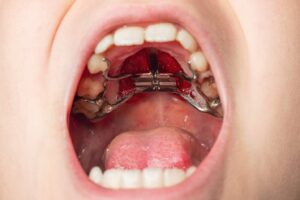
Not all smiles are fully ready for braces. For some, a little nudge may be all it takes to create a better environment for teeth to move. This is why a palatal expander is often recommended for younger patients. Knowing your child needs a device to widen their upper jaw can sound intimidating, especially if you’re concerned it might hurt. Here is a more detailed explanation of what your child can expect, what is normal, and why this device is necessary for a successful outcome.
Pain or No Pain: The Truth About Palatal Expanders
Do palatal expanders hurt? Sometimes. Does it cause pain? Not typically. Initial discomfort is normal and to be expected. After all, it’s slowly widening your child’s upper jaw. Within the first few days, they will likely feel some pressure in their teeth and mouth, and they may have a hard time talking or eating.
However, this will improve over time. You’ll be required to use a key to keep turning the device, ensuring it continues to widen their palate. With each turn, more pressure is applied, so more discomfort is expected.
What Can You Do to Help Your Child Achieve Relief?
While wearing a palatal expander, your child will want relief from discomfort, which you can provide with:
- Soft foods that don’t require them to bite down and apply more pressure to their teeth or bones
- Over-the-counter pain relievers to help minimize soreness
- A warm saltwater rinse to soothe irritated gums
- Cold food or drinks that offer temporary relief
- Cold compresses can help reduce inflammation
Make sure they avoid hard or crunchy foods, and help them stick to their oral hygiene routine. Keeping their teeth and gums clean and healthy reduces discomfort over time.
How Long Will Your Child Need to Wear a Palatal Expander?
It depends. Each child is different, so only their orthodontist can tell how long they’ll need to wear it. Generally, the initial expansion phase lasts only three to six weeks, but full treatment requires wearing the device for about one year. These remaining months allow new bone to form in the expanded area, giving your child’s upper jaw more room for teeth to erupt and shift throughout treatment.
Temporary discomfort may be the name of the game while your child wears their palatal expander, but remember, this short timeframe can have lasting, positive effects on their oral health and smile.
About the Author
Dr. Cody Saunders is an orthodontist who graduated from Columbia University and the NYU College of Dentistry before earning his certificate in orthodontics from Tufts University. He continually refines his skills and is an active member of the American Association of Orthodontists. When working with young patients who need palatal expanders, he explains the process and what children can expect as their jaws continue to develop. If you have questions about this device and whether it will hurt or not, visit our website to schedule an appointment.





 Follow Us