
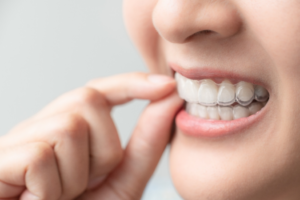
These days, more and more patients are turning toward Invisalign clear aligners to achieve straighter, healthier, and more attractive smiles. The aligners are sleek, comfortable, and discreet, making them an often-preferred alternative to traditional braces. However, some patients worry that they won’t be able to undergo successful Invisalign treatment due to bruxism, a condition that causes one to grind and clench their teeth, often subconsciously. The truth is, bruxism usually doesn’t have a negative impact on Invisalign treatment; here’s what you need to know.
How Does Invisalign Work?
Invisalign is a modern orthodontic treatment that accomplishes the exact same objectives as traditional treatment options like metal braces, but in a different manner. Rather than relying on metal brackets that are bonded to the teeth and connected via wire, Invisalign utilizes a system of clear, plastic aligners that are custom-made to fit over your unique teeth.
When worn for 22 hours a day, these aligners apply gentle pressure to your teeth and encourage them to slowly move to their correct, healthier positions. Patients advance to new sets of aligners as their teeth continue to be shifted, and before long, crookedness, overbites, underbites, and all types of other orthodontic issues can be properly corrected.
Does Bruxism Impact Invisalign Treatment?
Bruxism is the medical term for teeth grinding, and though it may seem like a harmless habit at first glance, it can cause some serious dental health complications. One of the primary issues that’s attributed to bruxism is wear on the teeth; as the upper and lower arches come into contact with each other, the excess pressure can cause the enamel on certain teeth to become damaged. This is why many patients wonder if Invisalign isn’t a viable option; they worry that their aligners would simply break.
In reality, the aligners can actually offer a small amount of protection from bruxism, since they serve as an extra layer of protection between your teeth. Plus, if the aligners do end up getting worn down, you’ll likely be moving on to your next set anyway by the time the damage becomes problematic. Of course, patients with bruxism may also end up feeling more self-aware of the habit during Invisalign treatment. This increase in awareness can even help curb it during stressful moments!
Just keep in mind that patients with severe bruxism may not be good candidates for Invisalign, which is why an initial consultation and proper evaluation are so important. That said, at the end of the day, bruxism isn’t something that keeps Invisalign out of the picture, and in many cases, the aligners will even help with the condition!
About Simply Orthodontics
At Simply Orthodontics, our expert team has helped countless patients over the years across New England to find orthodontic solutions that suit their needs and lifestyles. Whether you’re looking at traditional orthodontic options for yourself or a loved one, or you’re interested in straightening your smile with the help of Invisalign clear aligners, our team is ready to walk you through the treatment process. If you have any questions about the blog or you’re ready to schedule an appointment to see if Invisalign is right for you, feel free to reach out online or call today for more information or assistance.




 Follow Us